Editing is a common struggle for artists. Nothing feels finished. Everything can be improved. There is a nasty, self-critical process before putting art in front of an audience – and the torture often continues after that “publish” button is mashed with eyes averted.
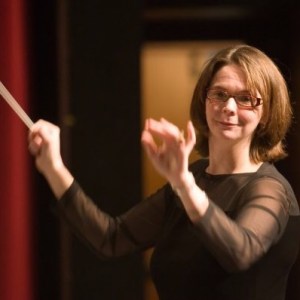
As a musician, I was able to release the editing anxiety as part of performing arts. I would rehearse and prepare, and then what happens has to be let go. Some performances will go beautifully and some will be a train wreck of epic casualty. Performance anxiety is part of every gig. I learned to shut it down, perform calm, and then allow my body to flood with the release of the anxiety into an after-performance-high. As I became more and more experienced, the need for pity parties diminished following poor performances. I flopped less hard, and I sulked for less time when I did flop. Part of it was growing consistency in my skill, and part of it was more emotional resilience that allowed for public failures.

As a clay artist, I had the luxury of throwing out a piece at nearly every stage. Then what I do is dependent upon how permanent the state of the clay. Before the first firing, I can recycle most if not all clay. After that, editing happens via the hammer. Hammer editing is brutal, permanent, and comes without regret – there is no greater satisfaction other than…perhaps…perfection that doesn’t need the hammer.

- I take the clay that had a chunk of sponge in it, and I throw the whole damned thing in the garbage. Where there is one chunk of sponge, there are more hidden.
- I sneeze and the whole pot is off center now, so I either manage to wrestle it back in line or I cut it off while hollering the mantra “that is all I can learn from that piece of clay.”
- I got distracted and now I have a chunky mug form that got too dry to trim. Into the bucket of water it goes to become squishy clay again.
- I sometimes find a piece that I thought I was done trimming, but upon re-inspection, I find that there is still to much JUNK IN THE TRUNK. I put that thing back on the wheel and trim more or into the water bucket it goes to be reclaimed!
- During firing, pots can crack or explode or glaze can run onto the shelf. They get the hammer. There is no second guessing. Its state is permanent and no editing can happen.
- Sometimes, something really valued is damaged, and it too cannot be edited back into usability. I have learned to let go. Dropping a full box of beautifully decorated plates teaches any potter to let go of the idea that things created have any permanence. Beauty in art is transient by nature.

As a visual artist, I tend toward similar permanence and editing practice. I love monoprinting – one shot and what happens is the lasting image. I can layer on top of a print that feels underwhelming, and I absolutely burn a fair amount of lackluster attempts. I really do find beauty though in the run of related prints – bold first print through reminiscent last faded memory. I prefer ink and paint to pencil. I prefer spontaneous over planned and belabored. I have erasers, but I use them to make highlights, not to remove misconceptions put on paper. There is as much truth in the way it is rendered – distorted by my vision and skill sets – as if I could render with photographic realism. I love taking a piece and doing something to it that cannot be undone. Spray the piece with water and let the pigments bleed. Splatter what is clean with lack of control. Wrinkle the paper up as if it were trash, and smooth it back flat to watch the stress break the surface of what was created. Cut it up and reassemble an image in a different order. Make something beautiful and risk mangling it, to highlight the fragility of expression in the first place.
Then I write. I feel like I “should” edit. I feel like I “should” review and reorganize and such. Lord knows I make typos and mistakes of passive voice and other nonsense that clouds communication…but…there is so much to be said. What happens to those words of tomorrow when I am laboring over a piece I started a month ago? How long can expression sit sidelined before it wanders off to play elsewhere? When I write, it comes out largely whole – semi stream of consciousness. More often than not, words bounce around inside my head until I have to spill them. They usually come out ordered already, and faster than is comfortable. I don’t think I will apologize for the amateur nature of my expression, nor do I feel it as novice effort in particular.
My art and my editing practice – jointly I have now come to understand them as my spirit, unedited truth, and it isn’t on me to revise in order to be more clearly understood by those who don’t try.
Here I Am
Where am I on any given day?
Today, when I look at light's array
the world is azure - clear energy blue.
Maybe tomorrow, eye perceives even brighter true hue.
Here I am today, art on display,
viewed through continuous but evolving loop replay
Will you witness my frame shift from stress undue?
Do you feel the sharp sprains from my stumbled step untrue?
We now share what common experiences convey.
Together we cry and yell and fight, jointly disobey
Or we gather in bond under true common understanding new
and realize the point is this...
   you are here - and I am here too
 Mudança
Hmm, I’ll have to think about this idea as I work in my studio today. I do a lot of thinking, playing with fabric, rearranging parts, etc so lots of editing. Other times, what happens, happens and I love that process just as much.
LikeLike